Beyond the Finished Canvas: What Nobody Tells You About the Studio Process
There is a common idea that making art begins with inspiration: you stand in front of a blank canvas, pick up a brush, and somehow the painting unfolds from there.
My experience is quite different.
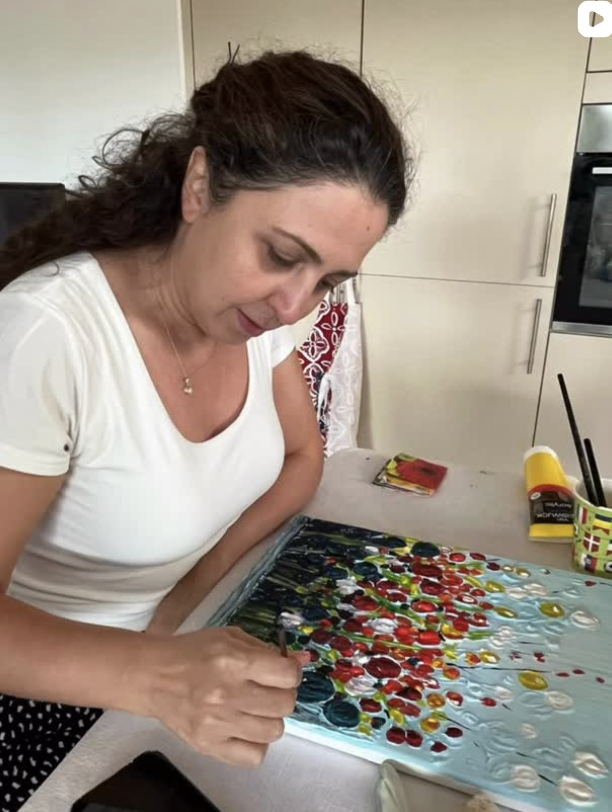
Working on a painting is rarely a straight path from an idea to a finished piece. I may begin with a certain composition, a colour relationship, or simply a feeling I want to explore. But once I start painting, the work begins to change. Some decisions work, others don’t, and sometimes I have to let go of the idea I started with altogether.
There is usually an uncomfortable stage somewhere in the middle. I think of it as the ugly phase. The colours don’t quite work, the composition feels unresolved, and for a while I may wonder whether the painting is going anywhere at all.
I’ve learned not to make decisions too quickly at this point. Often, adding another layer, removing something, changing a colour, or simply continuing to work is enough to open up a new direction.
What remains underneath
Most of my paintings contain much more than what is visible in the finished work.
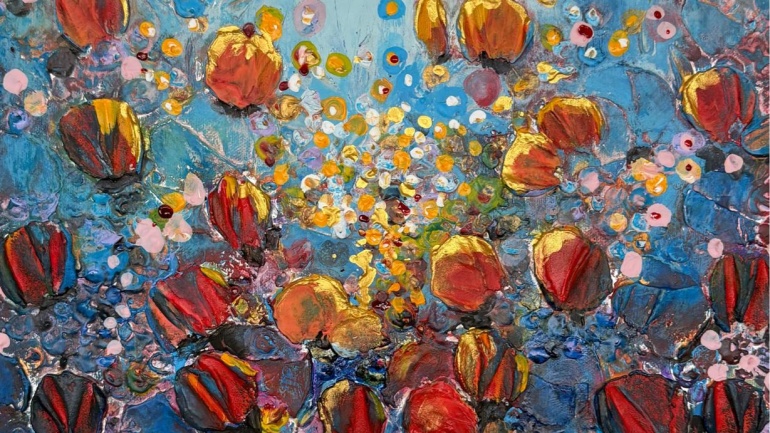
There may be earlier colours underneath, lines that have almost disappeared, areas that have been painted over, scraped back, or changed several times. I like that these traces remain part of the painting. Even when they are barely visible, they contribute to its surface and depth.
This is one of the things I enjoy about painting: the final image doesn’t completely erase what came before it.
Knowing when to stop
For me, one of the most difficult decisions is knowing when a painting is finished.
There is always the temptation to make one more adjustment. Sometimes it helps. Sometimes that extra mark is exactly what the painting didn’t need.
When I’m unsure, I often turn the canvas towards the wall or leave it somewhere in the studio for a few days. When I look at it again, I can usually see more clearly whether something is missing—or whether I simply need to leave it alone.
A finished painting may look like a single, resolved image. But behind it are many small decisions, changes of direction, mistakes, discoveries and moments of waiting.
Perhaps that is part of what makes an original painting interesting to look at closely. The finished surface is only the last stage of a much longer process.
Sibel Yildirim Esen